
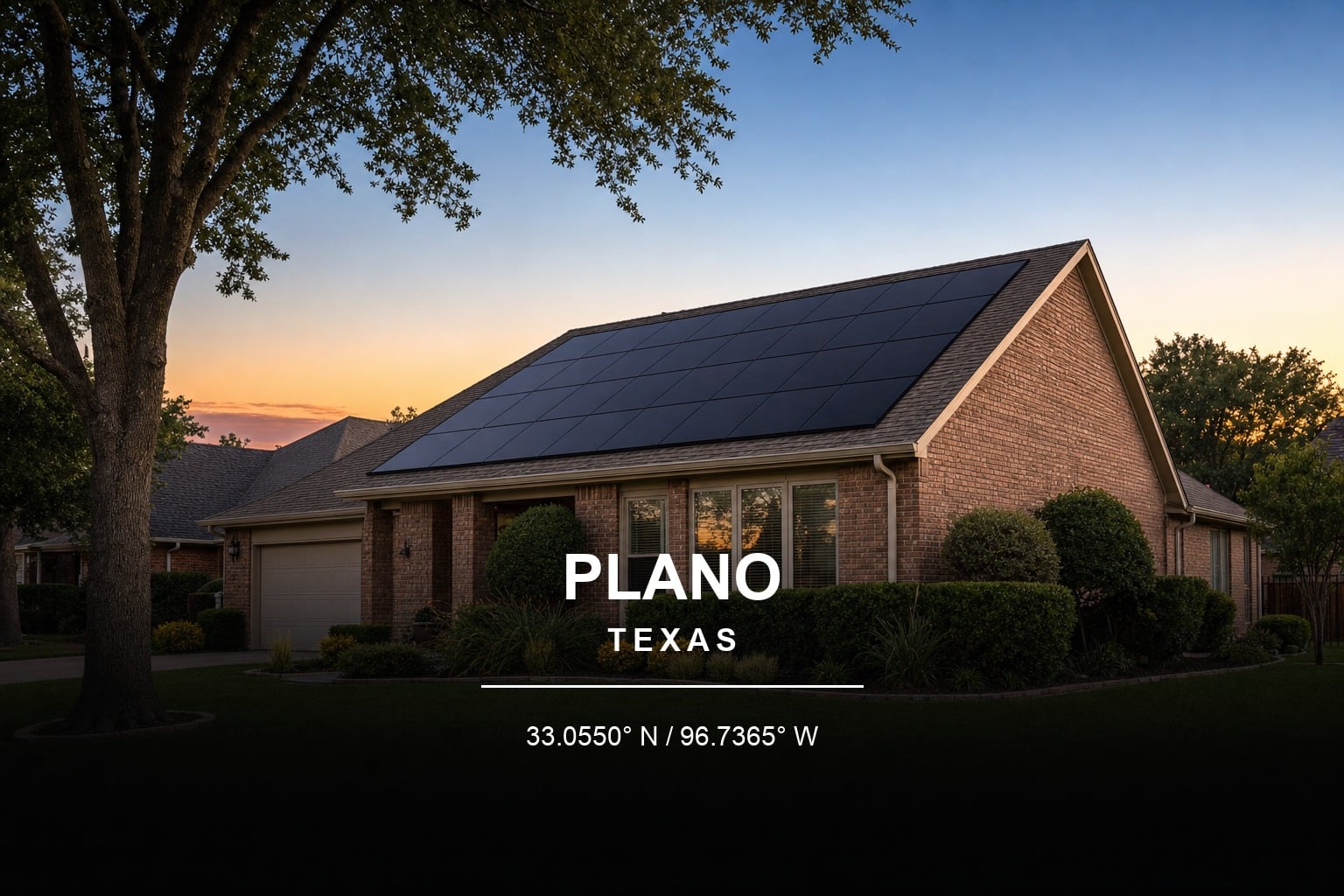
Plano’s electricity structure follows ERCOT’s standard deregulated model. Oncor is the Transmission and Distribution Utility — it owns Plano’s grid infrastructure, installs the bidirectional smart meter required for solar interconnection, processes interconnection applications, and charges a fixed delivery rate of approximately 5.58¢ per kilowatt-hour on all electricity consumed. You cannot choose Oncor — it is assigned by your address. What you do choose is your Retail Electric Provider, the company that sells you electricity and, under a solar buyback plan, credits you for exported solar.
Oncor territory offers the widest REP selection in Texas, with dozens of providers competing for DFW residential customers. For solar, the relevant subset is REPs offering solar buyback plans — programs that pay you for kilowatt-hours exported to the Oncor grid. In 2026, the leading solar buyback options in Oncor territory include: fixed-rate plans from REPs like Chariot Energy (approximately 8–10¢/kWh, predictable, uncapped); retail-match plans from REPs like TXU Solar Buyback (credits exports at the same rate you pay for consumption, effectively 1:1 net metering); and real-time wholesale plans that credit exports at ERCOT spot market prices, which spike dramatically during summer heat events but can be very low during high-solar midday periods. The right plan for a Plano homeowner depends on consumption patterns, risk tolerance for price volatility, and system size. Your installer should provide REP plan comparison as part of the financial modeling process — the REP choice is as important to long-term solar ROI as the system design itself.
Plano’s residential character makes it one of the strongest solar candidate markets in North Texas. The city’s housing stock — predominantly single-family homes built in the 1980s through 2000s on generous lots — tends to have large roof footprints, south-facing primary roof planes, and modern electrical panels that accommodate solar interconnection without costly upgrades. Homeownership rates in Plano are high relative to Texas urban averages, and the city’s demographic profile (above-average household income, high educational attainment, tech and finance industry employment) correlates with above-average solar adoption rates and willingness to evaluate larger system investments. HOAs are common in Plano’s master-planned neighborhoods — Texas law (Texas Property Code Section 202.010) prohibits HOAs from banning solar outright but permits reasonable aesthetic restrictions. Most Plano HOAs with solar policies have established approval processes that add a few weeks to the installation timeline; confirm HOA submission requirements before signing a contract.
Plano’s northern DFW location means slightly less solar irradiance than South Texas markets — approximately 4.8–5.0 peak sun hours daily versus 5.2–5.5 in Laredo or Corpus Christi. The difference is modest and does not materially change the economic case for Plano solar, but it does mean a well-sized Plano system will produce somewhat fewer kilowatt-hours per installed kilowatt than equivalent South Texas installations.
DFW area solar installations run $2.00–$2.50 per watt in 2026 — competitive with Houston and below the national average. A typical Plano system of 10kW–14kW costs approximately $20,000–$35,000 before incentives. Texas’s 100% property tax exemption (Texas Tax Code Section 11.27) prevents any Collin County property tax increase from the solar installation. No state income tax credit, no statewide rebate. No federal residential ITC for cash or loan purchases in 2026. Leases and PPAs are available through major national installers in Oncor territory. At a strong REP buyback rate and Plano’s consumption profile, cash-purchase payback runs approximately 9–12 years — consistent with other major Texas deregulated markets. EnergySage’s Texas statewide estimate of 8.73-year payback reflects broader modeling; Plano’s somewhat lower irradiance than South Texas markets places it toward the middle of that range.
Est. 2025
Est. 2016
Est. 2009
Est. 2009
Est. 2015
Est. 2006


