
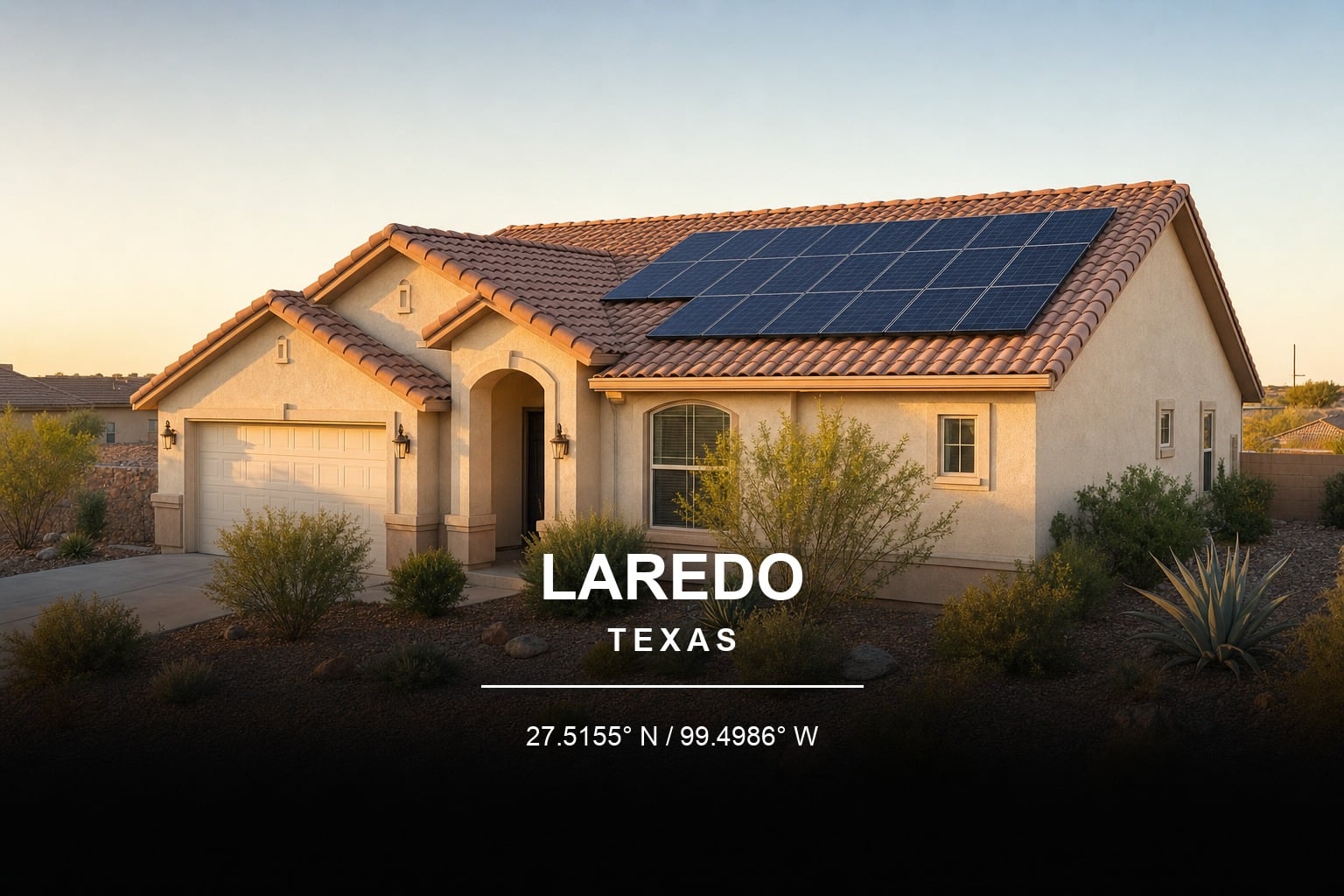
Laredo’s electricity infrastructure follows the same ERCOT deregulated structure as Corpus Christi, Dallas, and Houston. AEP Texas is the Transmission and Distribution Utility — it owns the grid, installs the bidirectional meter required for solar, processes interconnection, and charges a fixed delivery rate. You choose your Retail Electric Provider separately, and that REP sets the solar buyback rate you receive for exported electricity. Texas has no statewide net metering mandate; only REPs that offer solar buyback plans provide any credit for exports. Buyback rates in the AEP Texas service area vary widely across available REPs — from approximately 3¢ per kilowatt-hour for low-rate fixed plans to near-retail-match rates from premium solar buyback REPs. Selecting the right REP is as financially consequential as selecting the right solar installer in Laredo.
Laredo’s smaller residential solar market means fewer local installers are actively competing for business compared to San Antonio or Austin. Homeowners should expect to solicit bids from both local South Texas contractors and regional installers based in San Antonio (approximately 150 miles north) who serve the Laredo market. Installer experience with AEP Texas interconnection requirements in the South Texas subregion is important — confirm this before committing to a proposal.
Laredo’s extreme summer heat — regularly above 100°F from June through September, with nights remaining above 80°F — creates one of the strongest natural solar self-consumption environments in Texas. Under Texas’s deregulated buyback model, every kilowatt-hour your solar system produces and your home immediately consumes displaces grid electricity at your REP’s full consumption rate. Every kilowatt-hour exported earns only the buyback rate — typically 7–10¢/kWh on fixed plans, well below what you pay for consumption. Laredo’s AC loads during peak summer production hours are enormous relative to home size, meaning a well-sized system absorbs a high percentage of its production directly into cooling loads before reaching the export threshold. This natural self-consumption advantage — the same dynamic that drives Bakersfield and Palm Springs solar economics in California — means Laredo’s solar economics are less sensitive to REP buyback rate than a more temperate Texas market would be. Even a modest buyback rate produces strong overall solar returns when 70–80% of production is self-consumed at the full retail rate.
Laredo’s solar resource is also strong — the semi-arid South Texas climate delivers approximately 5.2–5.5 peak sun hours daily, with dry conditions from October through May that maximize production during the shoulder seasons. Summer production is somewhat affected by afternoon humidity and occasional cloud cover from Gulf moisture, but remains among the stronger performance environments in the state.
Laredo’s per-watt installation costs of $1.95–$2.35 per watt are at the lower end of the Texas range, reflecting lower labor costs relative to major metro markets. A typical Laredo system of 10kW–14kW costs approximately $19,500–$32,900 before incentives. Texas’s 100% property tax exemption on solar system value (Texas Tax Code Section 11.27) prevents any increase in annual Webb County property taxes from the installation. No state income tax credit exists — Texas has no income tax. No statewide solar rebate. No federal residential ITC for cash or loan purchases in 2026. Leases and PPAs are available in Laredo as in all ERCOT territory — the installing company claims the commercial ITC and passes savings through lower monthly rates. At typical Laredo consumption rates, strong self-consumption, and a solid REP buyback plan, cash-purchase payback runs approximately 9–12 years. Laredo’s rate of annual electricity consumption growth — driven by continued population growth and economic activity — means the electricity bills the solar system offsets will grow over the 25-year system life.
Est. 2025
Est. 2016
Est. 2009
Est. 2009
Est. 2015
Est. 2006


