
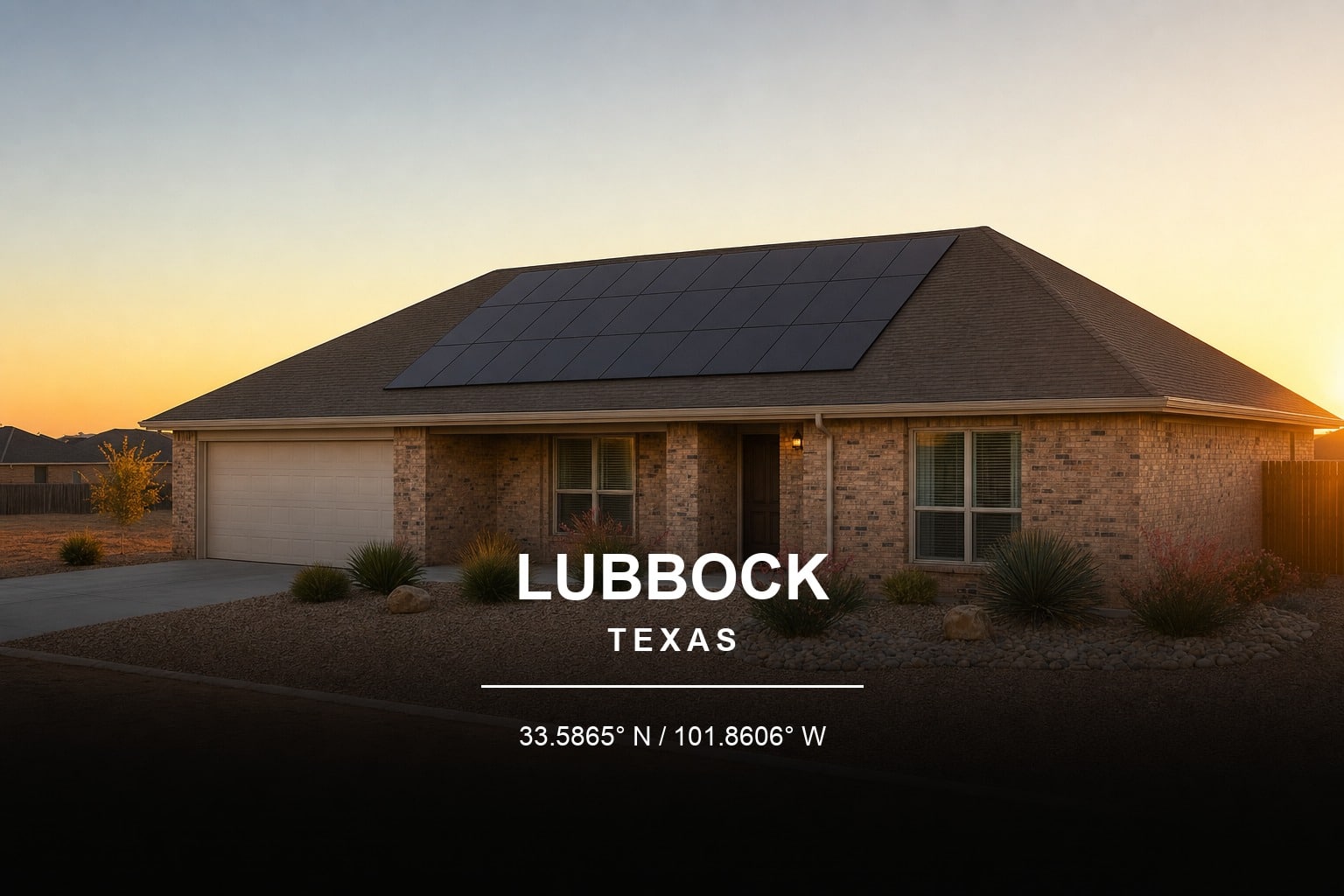
Before January 2024, Lubbock Power & Light was a municipal utility that both owned the grid and sold electricity to Lubbock residents. Solar homeowners dealt with LP&L directly for all aspects of their system — interconnection, net metering credits, and electricity supply. LP&L set the solar buyback terms, and customers had no choice of provider. That structure changed fundamentally when LP&L completed its ERCOT integration on January 1, 2024.
Today, LP&L functions as a TDU — the same role Oncor plays in Dallas or AEP Texas plays in Corpus Christi. LP&L owns Lubbock’s grid infrastructure, installs bidirectional smart meters, and processes interconnection applications. LP&L charges a fixed delivery rate on all electricity consumed, regardless of which REP you select. Your Retail Electric Provider — which you now choose from competing options — supplies your electricity and sets your solar buyback rate. Switching REPs after installation is permitted and can improve economics if better buyback plans become available.
This transition means information from pre-2024 sources about Lubbock solar is likely outdated. References to LP&L’s solar buyback terms, LP&L net metering rates, or LP&L-specific solar programs from before January 2024 describe a framework that no longer applies. For current Lubbock solar economics, the relevant question is which REP solar buyback plan you choose in the LP&L service territory — the same evaluation process as in any other ERCOT deregulated Texas market. Chariot Energy has been cited as a strong option for Lubbock REP solar buyback; verify current plan availability and rates through Texas PowerToChoose.org for LP&L territory.
Lubbock’s location on the Llano Estacado — the high, flat West Texas plateau at approximately 3,200 feet elevation — delivers one of the strongest solar resources in the state. The region averages 5.5+ peak sun hours daily on a south-facing tilted surface, consistently outperforming East Texas, the Gulf Coast, and most of central Texas. The high-plains climate is characterized by dry air, low humidity, and minimal cloud cover for the majority of the year, with more than 260 sunny days annually. Elevation reduces atmospheric scattering, amplifying the irradiance that reaches panel surfaces. Winter months, while cold, remain productive for solar — Lubbock’s dry, clear winter sky delivers meaningful daily output even in December and January, avoiding the prolonged cloudy periods that suppress production in more humid Texas markets.
Lubbock’s strong irradiance means a given system size produces more kilowatt-hours annually than equivalent systems in Houston, Dallas, or Austin. On an energy-per-dollar-invested basis, Lubbock solar installations are among the more productive in the state. When paired with a strong REP buyback plan, that additional production translates directly into more credits earned and faster payback. System sizing for Lubbock should account for the higher production potential — a properly sized Lubbock system will be slightly smaller in kilowatts than what the same consumption level would require in a lower-irradiance Texas market, because each kilowatt of capacity produces more annual output here.
Lubbock solar installations run approximately $2.00–$2.40 per watt in 2026 — competitive with DFW pricing and reflecting West Texas’s active installer market serving both residential and the region’s large commercial and agricultural solar base. A typical Lubbock system of 9kW–13kW costs approximately $18,000–$31,200 before incentives. Texas’s 100% property tax exemption (Texas Tax Code Section 11.27) prevents any Lubbock County property tax increase from the solar installation. No state income tax credit, no statewide rebate, no federal residential ITC for cash or loan purchases in 2026. Solar leases and PPAs are available in LP&L territory since deregulation — the installing company claims the commercial ITC. At West Texas irradiance levels and a solid REP buyback rate, cash-purchase payback in Lubbock runs approximately 8–11 years — among the better outcomes in Texas given the high production potential, and improved further for homeowners who select high-rate REP buyback plans.
Est. 2025
Est. 2016
Est. 2009
Est. 2009
Est. 2015
Est. 2006


