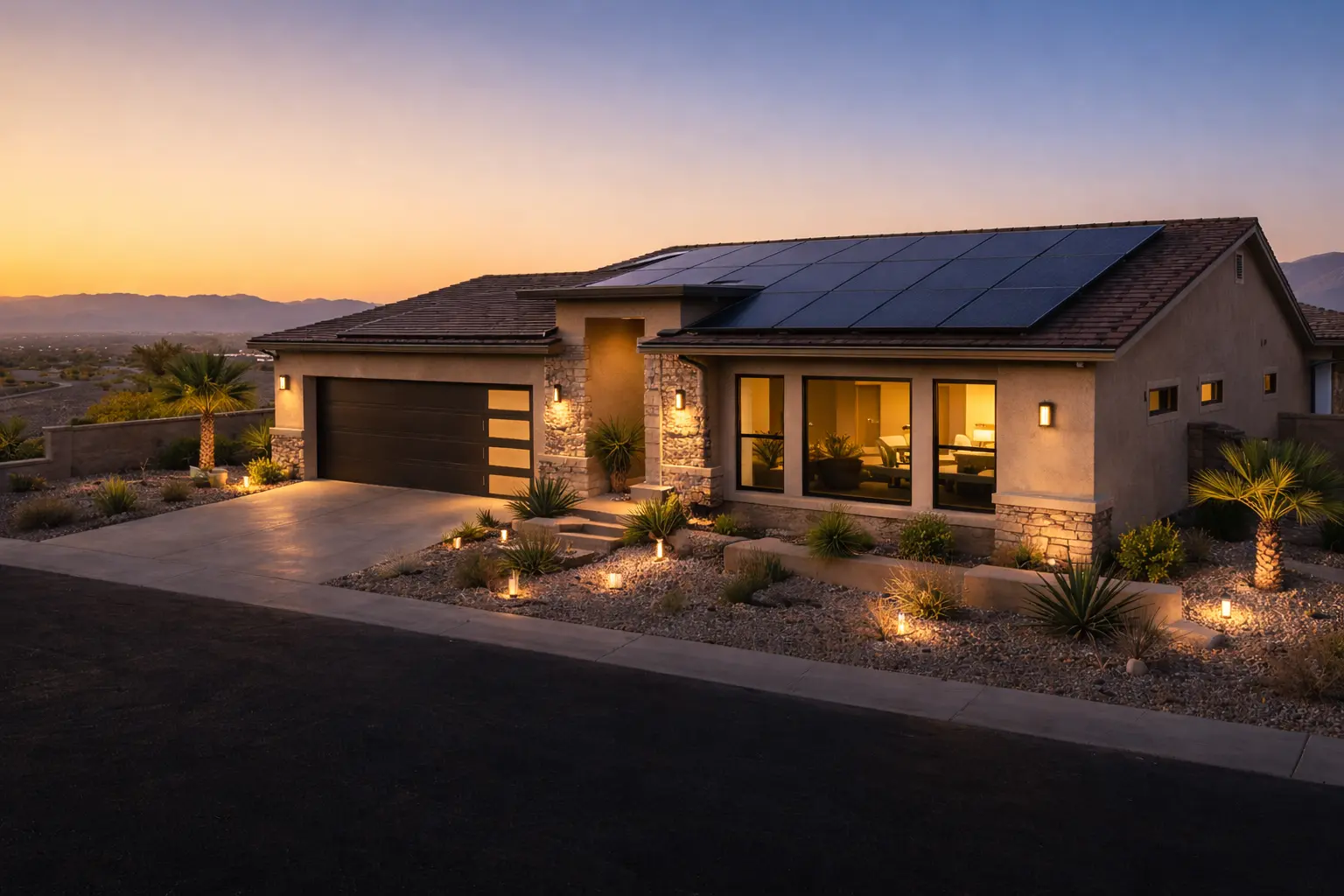
Solar Installers in Mesa, AZ

Mesa is one of the largest cities in the Phoenix metro — and the majority of Mesa homeowners are served by Salt River Project (SRP), whose rate structure is one of the most important factors in determining whether solar makes financial sense for your home. With SRP’s low export compensation rate and complex plan options, choosing the right installer and rate plan matters significantly in Mesa.

Is Solar Worth It in Mesa?

Mesa gets the same abundant Arizona sun as the rest of the Valley — over 300 days per year — but SRP’s rate structure means solar economics work differently here than in APS territory. Solar can still reduce your bills meaningfully, especially when designed around self-consumption rather than grid export. Key factors that shape your outcome: whether your address is served by SRP or APS (most of Mesa is SRP), which SRP solar rate plan you select (demand-based vs. export-based), whether battery storage makes sense for your usage pattern, and your peak usage hours and overall monthly consumption.

Utility Overview for Mesa

Salt River Project (SRP) is the primary utility serving Mesa homeowners. SRP’s solar rate structure is notably more complex than neighboring APS, and plan selection has a major impact on long-term savings.

SRP offers two categories of solar rate plans: demand-based and export-based. Demand-based plans (Customer Generation and Average Demand) offer the lowest usage rates but include monthly demand charges based on your peak 30-minute or 60-minute on-peak usage — a single appliance spike can drive a large charge. Export-based plans (Time-of-Use Export and EV Export) carry no demand charge but compensate excess solar generation at just $0.0345/kWh, which is well below retail. SRP’s export rate is among the lowest of any major utility in Arizona and is updated annually rather than locked for 10 years, making long-term savings harder to predict. Battery storage is strongly advisable for SRP customers — storing and self-consuming your solar production is worth significantly more than exporting it at SRP’s rate.

A smaller portion of Mesa addresses fall within APS territory. APS customers receive a higher export rate (currently around $0.069/kWh), no demand charges on standard solar plans, and a 10-year locked export rate — making the solar economics more straightforward than SRP.

Knowing which utility serves your specific address is the first step. For SRP customers, battery storage and a self-consumption strategy are key to maximizing solar value.

What Solar Costs in Mesa

Most residential systems in Mesa run between 6kW–10kW, with battery storage increasingly common given SRP’s low export rate — keeping production in-home is far more valuable than selling it back at $0.0345/kWh. Financing options include cash purchase, solar loans, and lease/PPA arrangements. Before comparing price per watt across quotes, evaluate projected self-consumption rate, which SRP rate plan the installer is recommending, warranty terms, and the installer’s specific experience with SRP billing.

Frequently Asked Questions

SRP currently compensates excess solar generation at $0.0345/kWh — significantly below the retail rate you pay for grid power. This makes it critical to design your system for maximum self-consumption rather than oversizing for export. It also means battery storage often improves the economics by allowing you to use more of your own production.
It depends on your usage patterns. Demand-based plans offer lower per-kWh rates but add monthly demand charges that can be unpredictable — one high-usage spike during on-peak hours can significantly increase your bill. Export-based plans are simpler and avoid demand charges, but compensate exports at just $0.0345/kWh. Most installers will model both scenarios for your specific usage before recommending a plan.
Mesa permitting typically runs 2–4 weeks. SRP also requires a separate interconnection application before your system can activate. Plan for 6–10 weeks total from contract signing to system activation, though timelines can stretch during high-volume periods.
For most SRP customers, battery storage significantly improves solar economics by allowing you to store and self-consume excess production rather than exporting it at SRP’s low $0.0345/kWh rate. SRP also offers a $250 rebate for demand management equipment. Whether the full investment pencils out depends on your system size, usage, and financing terms.
Traditional net metering is no longer available to new solar customers in Mesa. SRP’s demand-based plans previously offered net metering credits, but those plans were retired in late 2025. New SRP solar customers are now on export-based or demand-based TOU plans that compensate excess generation at a reduced rate rather than full retail value.

Not sure how to compare solar companies?

Before contacting installers, read our guide on how to evaluate proposals, warranties, and long-term support.
Learn More
Learn More
Learn More
Learn More
Learn More
Learn More
Learn More
Learn More
Learn More
Learn More
Learn More
Learn More
Learn More
Learn More