
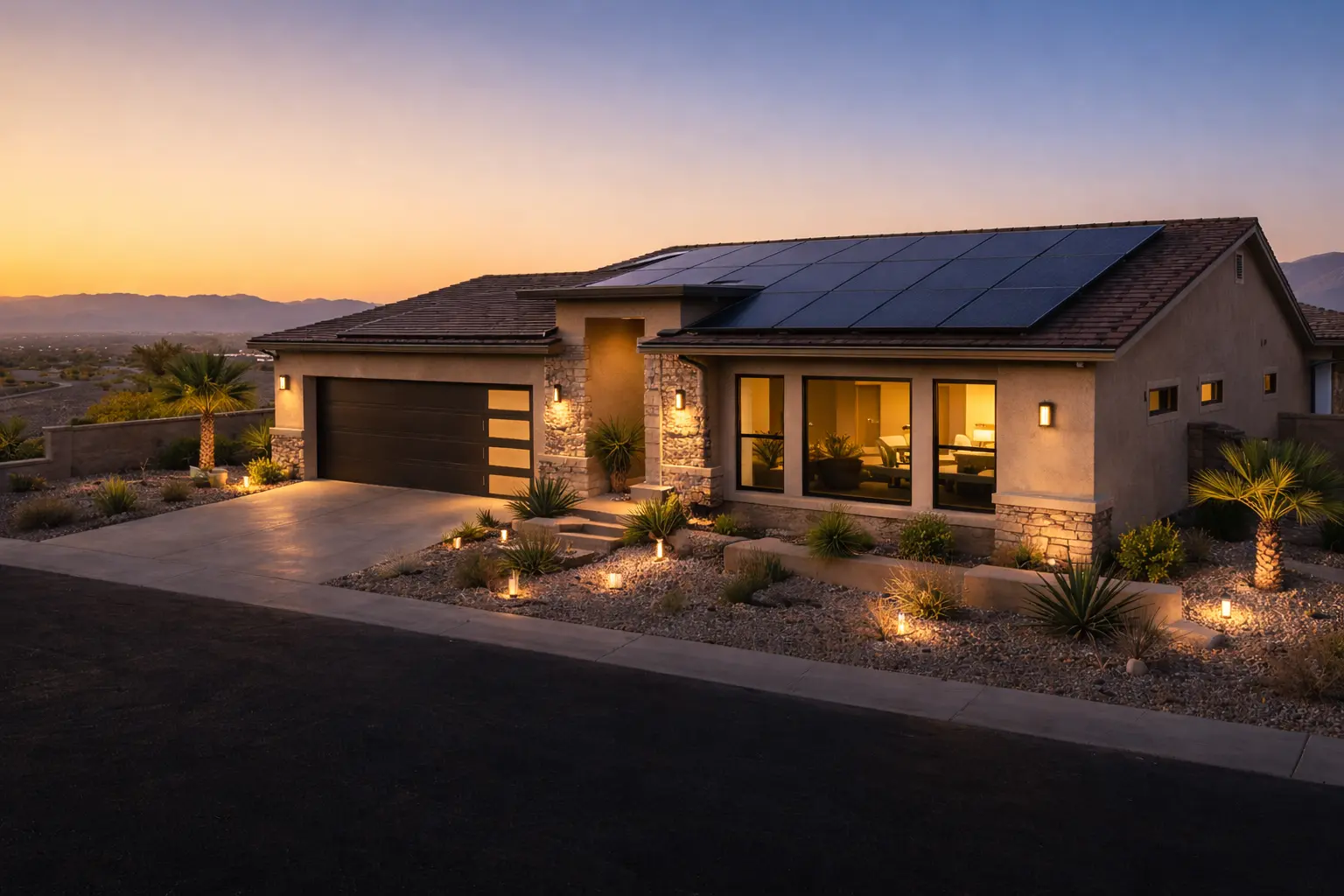
Scottsdale’s climate makes it one of the stronger solar markets in Arizona — long summers, abundant sun, and high cooling loads create real economic incentive to offset utility bills. Whether solar makes sense for your specific home depends primarily on which utility serves your address and how well your system can be designed around that utility’s rate structure. Key factors include: whether your address is served by APS (north) or SRP (south), roof orientation, age, and any HOA aesthetic requirements, whether battery storage improves your economics given your rate plan, and your average monthly usage and peak cooling season bills.
Scottsdale is split between two utilities with very different approaches to solar compensation — your address determines which applies to you.
APS customers in north Scottsdale are on time-of-use rate plans that reward solar production during peak hours. Export compensation runs approximately $0.069/kWh and is locked in for 10 years from interconnection — giving you predictable long-term savings. APS has no monthly demand charge on standard residential solar plans, making it more straightforward than SRP. Interconnection approval is required before activation.
SRP serves south Scottsdale and offers a more complex set of solar rate plan options. Demand-based plans offer lower per-kWh rates but include monthly demand charges that can spike from a single high-usage interval. Export-based plans avoid demand charges but compensate excess generation at just $0.0345/kWh — well below retail. Unlike APS, SRP updates its export rate annually rather than locking it for 10 years, making long-term savings harder to project. Battery storage is strongly advisable for SRP customers to maximize self-consumption.
North Scottsdale APS customers generally see a cleaner solar ROI with fewer billing surprises. South Scottsdale SRP customers can still benefit significantly, especially with battery storage — but plan selection and system design are critical.
Most residential systems in Scottsdale range from 6kW–10kW, with battery storage more common among SRP customers seeking to avoid low export rates and among homeowners wanting backup power during outages. Financing options include cash purchase, solar loans, and lease/PPA arrangements. Before comparing price per watt across quotes, evaluate which rate plan the installer is recommending, projected self-consumption, warranty coverage, and the installer’s track record with both APS and SRP interconnection processes.
Est. 2010
Est. 2021
Est. 2005
Est. 2016
Est. 2009
Est. 2009
Est. 2015
Est. 2007
Est. 2006