
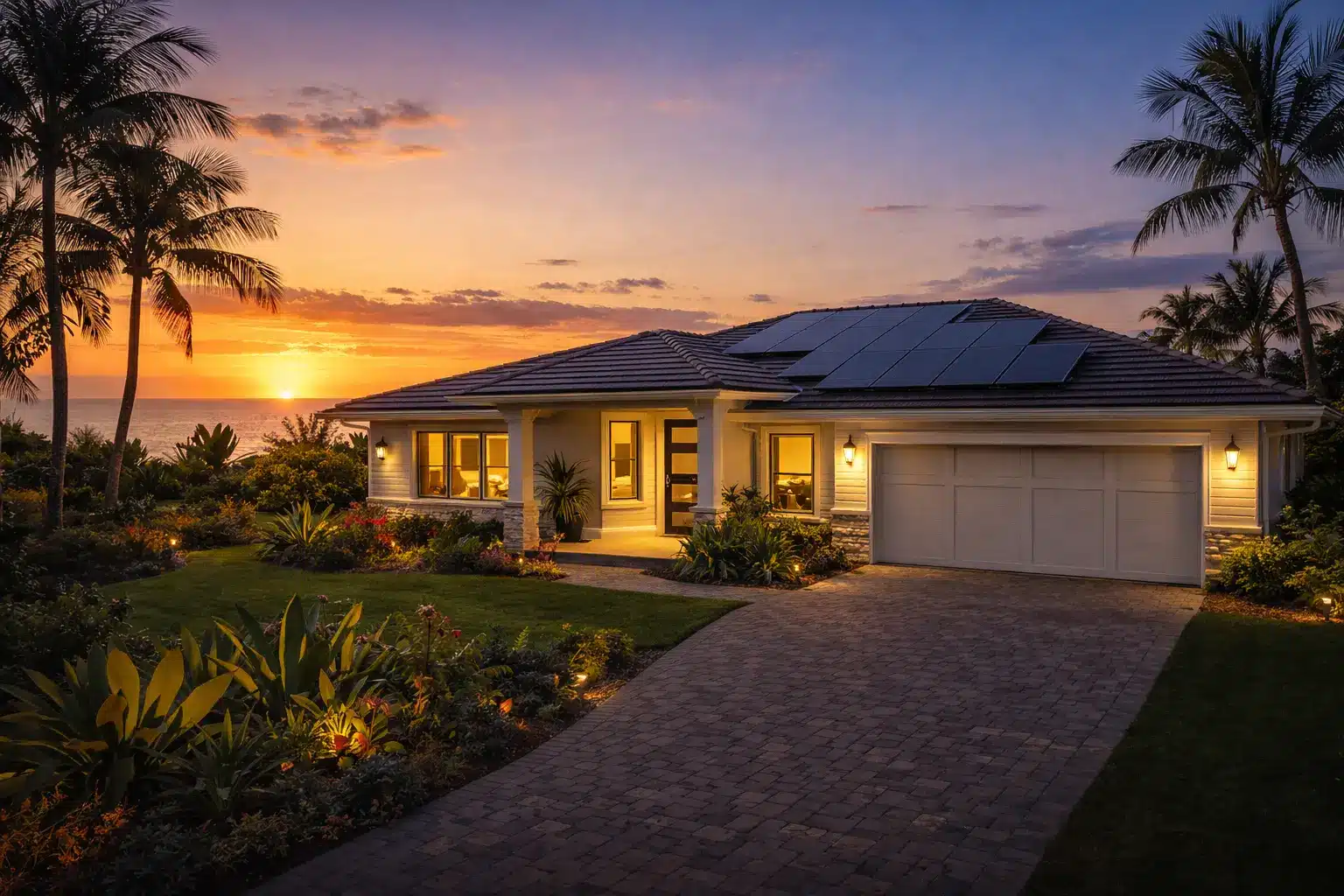
LA homeowners face electricity rates ranging from 22¢ to 37¢/kWh depending on usage tier and time of day — and LADWP rates have been trending upward. Under LADWP’s traditional net metering program, a well-sized solar system can eliminate virtually your entire energy bill, with excess credits rolling over indefinitely. Key factors shaping your outcome:
– Your monthly usage and which LADWP rate schedule you’re on (tiered R-1 or time-of-use)
– Roof orientation and shading — LA’s consistent sun makes even east/west-facing systems productive
– Whether you want battery backup for outage protection (not required for strong savings under LADWP NEM)
– If you rent or live in a multifamily building, LADWP’s Shared Solar and Virtual Net Metering programs offer alternative paths
Los Angeles is served by the Los Angeles Department of Water and Power (LADWP), the largest municipal utility in the United States. LADWP also serves parts of Bishop, Culver City, South Pasadena, and West Hollywood.
*Los Angeles Department of Water and Power (LADWP)*
LADWP operates its own net metering program — completely separate from California’s NEM 3.0 policy, which only applies to the three investor-owned utilities (PG&E, SCE, and SDG&E). Under LADWP net metering, excess solar production is credited at near-retail rates, not reduced avoided-cost rates. Credits roll over month to month indefinitely and can be used to offset future energy charges. There is no mandatory time-of-use enrollment for residential NEM customers, though a TOU option exists (High Peak hours run 1–5 PM). Systems up to 30kW use LADWP’s simplified Type 1 interconnection process with no interconnection fees for most standard residential installs. Systems below 10kW may qualify for a streamlined fast-track review.
*Bottom line:* LADWP’s net metering program is significantly more favorable than NEM 3.0 for LA homeowners. Unlike SCE customers in Irvine or Anaheim who must pair solar with battery storage to get strong returns, LADWP customers can build effective solar-only systems with shorter payback periods — typically around 6–7 years. Battery storage still adds value for backup power and bill optimization, but it’s not required to make the economics work.
Los Angeles solar installation costs are in line with the broader Southern California market, typically running $2.30–$2.75 per watt. A typical 6–8kW residential system runs $14,000–$22,000 before incentives. The LA Department of Building and Safety (LADBS) issues permits for solar installations; permitting typically takes 1–2 weeks for straightforward residential projects. Total timeline from contract to system activation generally runs 8–12 weeks. California’s property tax exclusion for solar applies to LADWP customers, and income-qualified homeowners in disadvantaged communities may qualify for DAC-SASH rebates.
Est. 2004
Est. 2013
Est. 2007
Est. 2001
Est. 2007
Est. 2010
Est. 2021
Est. 2010
Est. 2009
Est. 1988
Est. 2007
Est. 2012
Est. 2015
Est. 1998
Est. 2015
Est. 2007
Est. 2016
Est. 2006