
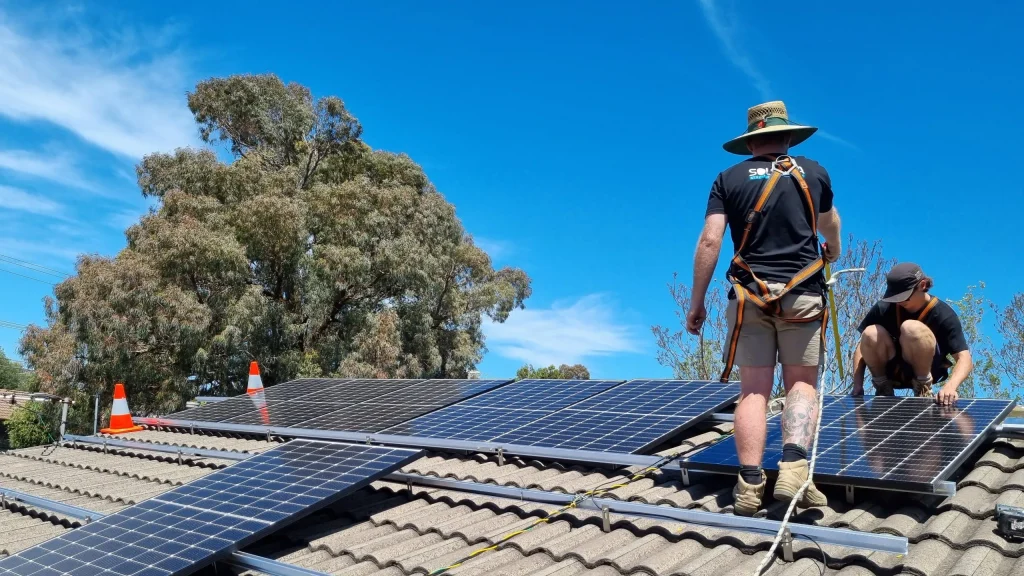
An installer just told you that you need a completely new solar system.
Before you agree to remove every panel from your roof, pause.
Full replacement is the most expensive move you can make in residential solar. In some situations, it’s justified. In others, it’s unnecessary.
This guide walks through when replacement makes sense, when expansion or targeted upgrades are smarter, and how to pressure-test a replacement proposal before you sign.
What “Replacement” Actually Means
Installers don’t always use this term precisely, so let’s define it clearly.
Full replacement means:
-
All existing panels are removed
-
Racking and mounting hardware are replaced
-
The inverter is replaced
-
A brand-new system is designed and installed
This is fundamentally different from:
-
Adding panels to unused roof space
-
Swapping a failing inverter
-
Installing a battery
-
Upgrading underperforming components
Those are upgrades. Replacement is a complete reset.
The distinction matters because the cost structure, permitting process, and utility policy implications are very different.
When Full Replacement Is Actually Justified
Replacement is legitimate — but only under specific conditions.
1. Your Roof Space Is Fully Utilized and You Need More Production
If every viable roof section already has panels and you’re still carrying meaningful electric bills, panel efficiency may be your constraint.
Panel output has improved significantly:
-
2015–2018 panels: ~250–310 watts
-
2026 panels: ~420–450 watts
If your roof is fully committed but your electricity usage has grown, replacing lower-output panels with modern high-density modules can increase production from the same footprint.
This is one of the few scenarios where replacement can make financial sense.
2. Your System Was Undersized and Cannot Be Expanded
Some systems were intentionally designed to offset only 60–70% of usage, with the expectation of adding panels later.
If your current roof configuration prevents expansion — and you consistently fall short of your production goals — redesigning from scratch may be the only way to reach full offset.
This is different from a properly sized system where usage has simply increased. That situation often has lower-cost solutions.
3. Your Electricity Usage Has Fundamentally Changed
Modern homes use more electricity than they did five to ten years ago. Common drivers include:
-
Electric vehicles (most EVs add 3,000–5,000 kWh annually depending on driving habits)
-
Heat pumps replacing gas heating
-
Addition of an ADU or dedicated home office
-
All-electric appliance transitions
If your original system was never designed for this level of load — and expansion is not viable — replacement allows you to design for your current lifestyle.
When Replacement Is the Wrong Call
These scenarios should raise immediate caution.
You Still Have Roof Space Available
If usable roof sections remain — even partial ones — expansion should be explored first.
There is rarely a rational reason to remove functioning, producing panels when additional roof space exists. A well-designed expansion can often close the production gap at a fraction of replacement cost.
You’re Under a Lease or Active Loan
Replacing a financed system is financially complex:
-
You may carry two obligations at once
-
Lease buyout costs can erase replacement benefits
-
Some loans include prepayment penalties
The replacement analysis must include the full cost of exiting your existing agreement — not just the cost of the new system.
You Have Grandfathered Net Metering
This is one of the most consequential factors in a replacement decision.
Older systems are often locked into more favorable net metering policies that are no longer available. Full replacement typically triggers a new interconnection application, which can reset your export compensation structure.
Before agreeing to replacement, confirm in writing how your utility will treat the new system. This single variable can materially change the financial outcome.
What Happens to Your Old Panels?
Working panels still produce meaningful electricity.
Responsible options may include:
-
Donation to nonprofits (potential tax deduction)
-
Secondary off-grid applications (shops, RV systems)
-
Community solar repurposing
-
Disaster relief deployments through organizations such as GRID Alternatives
A 250-watt panel from 2016 is not obsolete — it remains a productive asset in the right context.
Ask your installer about their disposal and reuse process. Avoid contractors who default to landfill.
How to Evaluate a Replacement Proposal
If you’ve received a recommendation for full replacement, ask these questions:
-
Is roof expansion truly impossible? Ask for a specific technical explanation.
-
What happens to my net metering agreement? Get a written response.
-
What is the buyout cost on my current financing? Include it in the total math.
-
What is the modeled production difference between expansion and replacement?
-
What is the payback period comparison between both options?
If an installer cannot clearly answer these questions, that’s information in itself.
Frequently Asked Questions
Frequently Asked Questions
Most modern solar panels carry 25-year performance warranties and often continue producing for 30 years or more with gradual degradation. Panel failure alone is rarely a valid reason for full replacement.
It can, especially if your existing panels are lower-efficiency models and your roof space is limited. The financial benefit depends on replacement cost, utility policy, and available alternatives.
Often, yes. Many systems can be expanded depending on inverter compatibility, electrical capacity, and roof layout. Expansion is frequently possible even when panels are from different generations.
In many utility territories, yes. Replacement can trigger a new interconnection agreement under current rules. This should be verified before signing a contract.
No. Most homeowners who feel their system is underperforming benefit more from expansion, inverter upgrades, or load adjustments than from full removal. Replacement is justified in specific situations, not as a default solution.
Final Thoughts
When it comes to home solar production, your roof is your most valuable resource. In most cases, the available space is fixed — and how efficiently you use it determines how close you get to your energy goals.
The priority should always be to optimize what’s already working. But older systems do have limitations. Panel efficiency improves, household usage changes, and utility policies evolve.
There may come a point when repurposing that roof space with a higher-performing system makes strategic sense. The key is making that decision deliberately — based on real constraints and clear math — not pressure.
Your roof is limited. Use it wisely.