
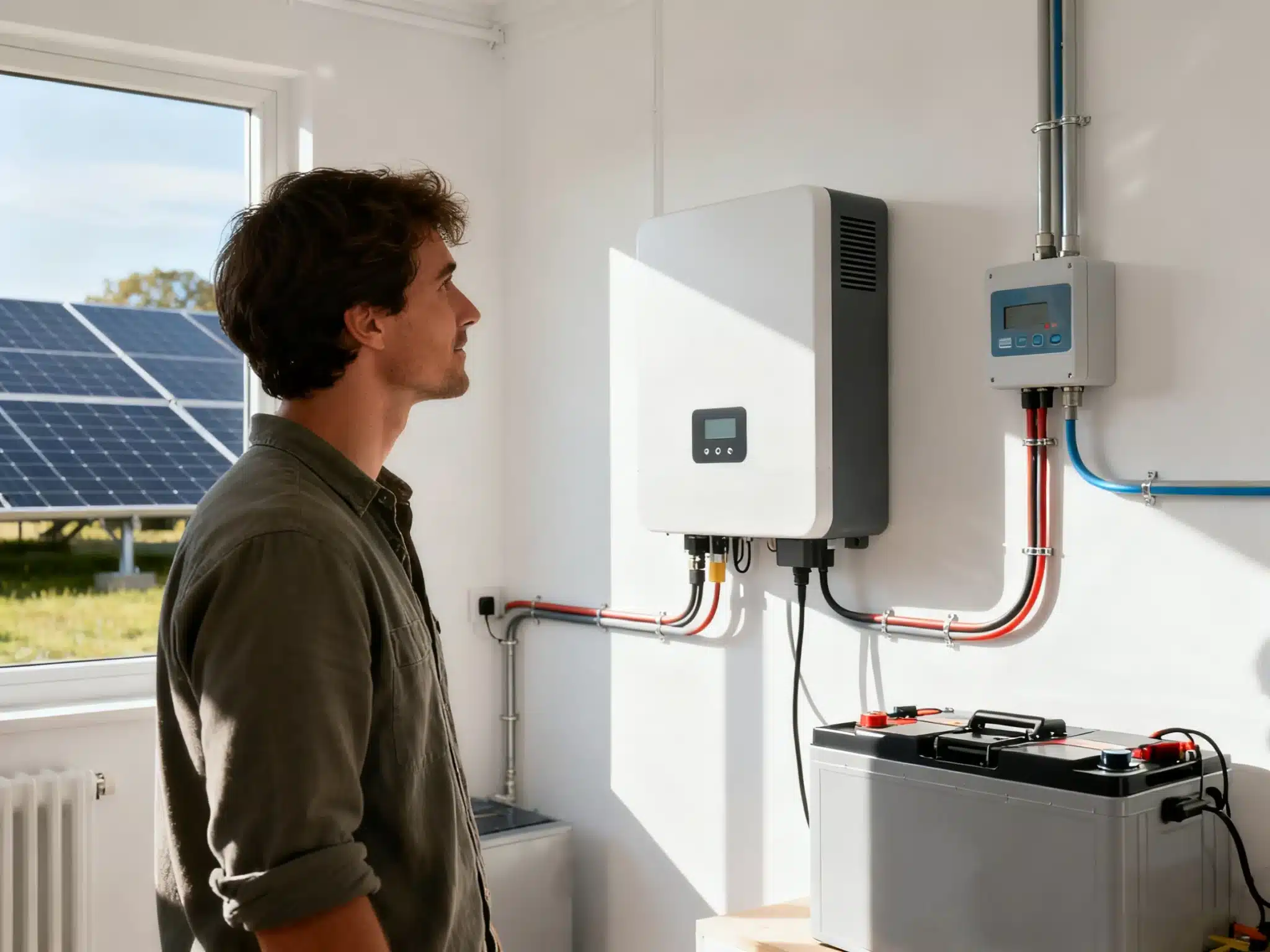
What “Producing Power” Actually Means
Before troubleshooting, clarify the question.
Producing power = your solar panels are actively generating electricity (measured in kW).
Lowering your bill = depends on production, how much power your home uses, your utility rate, time of year, and billing structure.
It’s possible for your system to be producing power while your bill remains high — especially:
- During winter months
- During heavy AC usage in summer
- After adding an EV
- After utility rate increases
This article focuses on one question: Is your home solar system producing power at all?
If the answer is yes but your bill is still high, that’s a different issue — and we address that in the FAQ below.
Step 1: Check Your Solar Monitoring App
If your system includes monitoring (most do), this is the fastest way to confirm whether your home solar system is producing power.
Common Monitoring Platforms
- Enphase Energy ‚Üí Enlighten
- SolarEdge Technologies ‚Üí SolarEdge Monitoring
- Tesla ‚Üí Tesla App
- SunPower ‚Üí mySunPower
- SMA Solar Technology ‚Üí Sunny Portal
If you bought your home with solar and aren’t sure which brand you have, check the label on the inverter box. It’s usually in your garage, on an exterior wall near the meter, or in a utility room.
What to Look For
- Real-time production (kW reading during daylight)
- Daily production graph
- Recent 7—30 day activity
- Error alerts or “system offline” messages
Red Flags
- Production stuck at zero during sunny days
- No data for multiple days
- “Inverter offline” errors
- Repeated fault notifications
Step 2: Check the Inverter Directly
Your inverter is the heart of your system. If it’s not operating, your solar system is not producing power — regardless of what the panels are doing.
What to Check
- Green light / “Normal” status ‚Üí typically good
- Red light / “Fault” ‚Üí issue
- Blank screen ‚Üí possible shutdown or failure
- 0 kW output during sunny conditions ‚Üí likely problem
If it’s sunny and your inverter reads zero output, that’s a strong signal your system is not producing electricity.
Step 3: Check Breakers and Disconnects
Solar systems have multiple shutoff points for safety.
Inspect:
- Main panel breaker labeled “Solar” or “PV”
- Solar sub-panel (if installed)
- Exterior disconnect box
- AC disconnect near inverter
If a breaker trips immediately after resetting, stop and call a professional. That usually indicates a real electrical fault.
Step 4: Look for Obvious Physical Issues
From ground level only:
- Fallen branches
- Debris covering panels
- Heavy snow
- Damaged conduit
- Recent electrical work nearby
Step 5: Confirm How Much It’s Producing
If your system is producing power but not as much as expected, consider:
- Seasonal drops (winter production can be 40—60% lower than summer)
- New shading from trees or nearby construction
- Normal panel degradation (gradual over decades)
- A failed microinverter or optimizer
Panel-level monitoring — common with Enphase and SolarEdge systems — can reveal individual panel failures without shutting down the entire system.
Step 6: Decide Whether to Call a Professional
Contact a technician if:
- Production has been zero for multiple sunny days
- Your inverter shows persistent fault codes
- Monitoring hasn’t updated in weeks
- Breakers repeatedly trip
- Your bills increased with no change in usage
Common Reasons Solar Systems Stop Producing
Most issues fall into predictable categories:
- Inverter failure (common after 10—15 years)
- Tripped breaker
- Monitoring disconnected from internet
- Utility disconnect after electrical work
- Failed microinverter
- Installer out of business (hardware is usually still supported by the manufacturer)
The good news: most are repairable without replacing the entire system.