
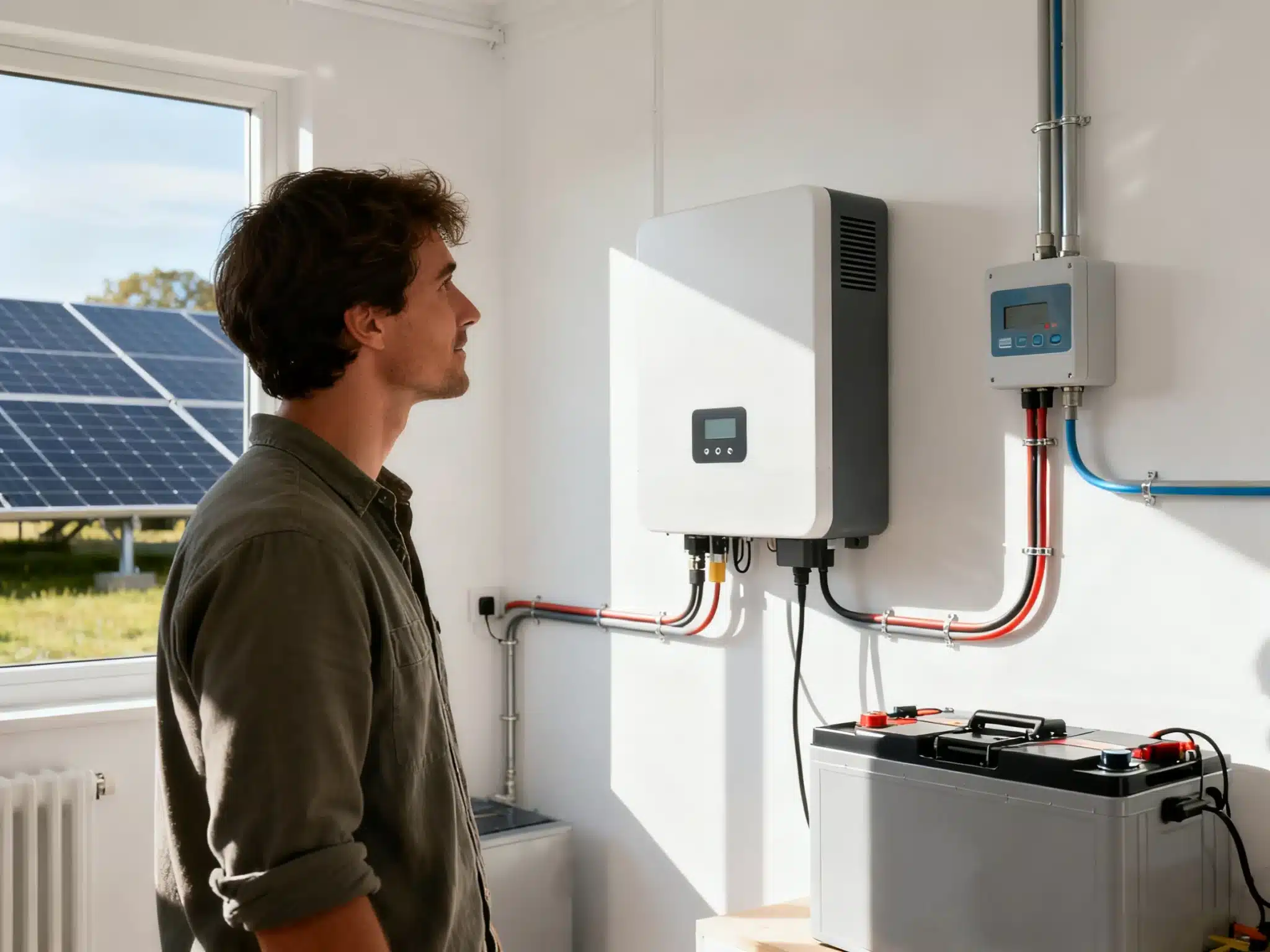
You already have solar panels — great. But every evening when the sun goes down, you’re back to drawing power from the grid. Adding a battery changes that equation, letting you store the energy your panels produced during the day and use it when you actually need it most. Here’s everything you need to know before making that call.
Why Add a Battery If You Already Have Solar?
Solar panels produce power when the sun shines. Your home uses power around the clock. Without storage, that mismatch means you’re exporting cheap solar energy to the grid during the day and buying it back at full retail price in the evening. A battery closes that gap.
There are a few specific situations where adding battery storage makes especially strong sense:
- Your utility has time-of-use (TOU) rates. If your electricity costs more between 4–9 PM, a battery lets you avoid those peak charges by discharging stored solar energy instead.
- Net metering in your state has changed or is being reduced. Many utilities are scaling back how much they pay for exported solar. If you’re getting less credit for your excess power, it makes more sense to store and use it yourself. Check current rules in your state at DSIRE.
- You want backup power. Grid outages are becoming more common and longer in duration. A battery paired with solar can keep your lights, refrigerator, and critical devices running when everyone else is in the dark.
- You work from home or have medical equipment. Power reliability isn’t a convenience — it’s a necessity for a growing number of households.
None of these reasons require you to buy a new solar system. Your existing panels can charge a battery added years after your original installation.
Can Any Solar System Work With a Battery?
The honest answer: most systems can be retrofitted with storage, but compatibility varies depending on your inverter type and system age. Here’s how to think about it.
String Inverter Systems
If your system uses a traditional string inverter (a single box, usually in your garage or utility room), adding AC-coupled battery storage is the most common retrofit path. Batteries like the Tesla Powerwall are AC-coupled by design, meaning they connect to your home’s electrical panel independently of your existing inverter. This approach works with virtually any string inverter system and doesn’t require replacing your inverter.
Microinverter or Power Optimizer Systems
If your panels use microinverters (Enphase is the most common brand) or DC power optimizers (SolarEdge), you have good options too. Enphase’s IQ Battery is designed to integrate seamlessly with Enphase microinverter systems. SolarEdge has its own compatible battery lineup. In both cases, adding storage through the same ecosystem is usually cleaner and may give you better monitoring and control.
Older or Unusual Inverters
Systems that are 10–15 years old may use inverter technology that’s less straightforward to integrate with modern batteries. That doesn’t mean it’s impossible — it may just require additional equipment or a partial inverter upgrade. If your system is older, check out our article on outdated solar technology to understand your options before getting quotes.
AC-Coupled vs. DC-Coupled: What’s the Difference?
You’ll hear these terms from any installer you talk to. Here’s what they actually mean for your situation.
AC-Coupled Storage
Your solar panels produce DC electricity. Your existing inverter converts that to AC for your home. An AC-coupled battery is connected on the AC side — it takes AC power, converts it back to DC to store it, then converts it back to AC again when you need it. That’s two extra conversion steps, which introduces a small efficiency loss (typically 5–10%). The big advantage: it works with your existing inverter, no replacement required. Tesla Powerwall and the Franklin aPower are common AC-coupled options.
DC-Coupled Storage
DC-coupled batteries connect before your inverter, storing power in its native DC form. This is more efficient, but generally requires a hybrid inverter — meaning your existing inverter may need to be replaced or supplemented. If your current inverter is relatively new and under warranty, you’ll want to factor in those replacement costs carefully.
Which Should You Choose?
For most retrofit situations, AC coupling is the simpler and more cost-effective path. If your inverter is aging and due for replacement anyway, a DC-coupled hybrid inverter system might be worth the upgrade investment. A good installer will walk you through both options with real numbers — find a qualified solar installer near you to get an honest assessment for your specific setup.
How Much Does Adding a Battery Cost?
Battery retrofit costs depend on the battery you choose, your electrical panel’s condition, and how much labor is involved in integrating the system. Here are realistic ranges to work with as you plan.
- Battery hardware alone: Most residential batteries range from $8,000 to $15,000 before installation, depending on capacity and brand. A single Tesla Powerwall, Enphase IQ Battery, or Franklin aPower unit typically falls in the $10,000–$13,000 range installed.
- Installation labor: Generally $1,500–$3,000, but can be higher if your electrical panel needs an upgrade or if the integration requires additional components.
- Panel upgrade: If your main electrical panel is older (100-amp service, Federal Pacific, or Zinsco panels), an upgrade to 200-amp service may be required or recommended. Budget $2,500–$5,000 if that applies to you.
The good news: the federal Investment Tax Credit (ITC) applies to battery storage added to an existing solar system, as long as the battery is charged primarily by solar. As of 2026, that’s a 30% credit on the full installed cost of the battery system. See our full breakdown of solar and storage tax credits to understand exactly what you can claim.
Some states and utilities also offer additional battery incentives on top of the federal credit. California’s SGIP program and similar state-level programs can dramatically reduce out-of-pocket costs. Check DSIRE for what’s currently available in your state.
Use our solar savings calculator to get a rough sense of payback period based on your electricity rates and usage.
Which Battery Should You Add?
There’s no single best battery — it depends on your inverter type, backup needs, and budget. Here’s a practical overview of the most commonly installed options in 2026.
Tesla Powerwall 3
The Powerwall 3 is an integrated inverter-and-battery unit, which means it’s best suited for new installations or situations where the existing inverter is being replaced. It has a usable capacity of 13.5 kWh and solid whole-home backup capability. It’s AC-coupled when added to existing systems without replacing the inverter.
Enphase IQ Battery 5P
If you already have Enphase microinverters, the IQ Battery 5P integrates natively with your existing system and Enphase’s monitoring app. It’s modular, meaning you can stack multiple units for more capacity. Excellent for Enphase households looking for a clean, low-hassle retrofit.
Franklin aPower 2
Franklin Electric’s aPower 2 is a competitive option that works across multiple inverter brands and offers strong backup capability. It’s gained meaningful market share as an alternative to Tesla for AC-coupled retrofits.
SolarEdge Home Battery
If your system uses SolarEdge optimizers, the SolarEdge Home Battery integrates well within that ecosystem and allows DC coupling with compatible SolarEdge inverters.
For a more detailed side-by-side comparison, read our battery comparison guide. The most important step is having an installer evaluate your specific system before committing to a brand — compatibility matters more than marketing.
What to Expect From the Installation Process
Adding a battery to an existing solar system is meaningfully simpler than a full solar installation, but it’s still a permitted electrical project. Here’s a realistic timeline and process breakdown.
- Site assessment: A qualified installer will evaluate your existing inverter, panel, and system configuration to confirm compatibility and identify any required upgrades. This is usually done during a free quote visit.
- Proposal and permitting: Once you approve the design and pricing, the installer files for permits with your local building department. Permit timelines vary widely — anywhere from a few days to a few weeks depending on your municipality.
- Installation day: The physical installation typically takes 4–8 hours for a single battery. If electrical panel work is also being done, add a few more hours. Your power will be briefly shut off during the connection work.
- Inspection: A local inspector will sign off on the installation before the system is activated. Your installer coordinates this.
- Utility notification: In most states, your utility needs to be notified of the battery addition, especially if it changes how your system interacts with the grid. Your installer handles this paperwork.
From signed contract to operational battery, expect 3–8 weeks in most markets. Some areas with high solar adoption (California, Hawaii, Arizona) can take longer due to permitting backlog.
Is Adding a Battery Actually Worth It?
That depends on your specific situation — and anyone who gives you a blanket yes or no without knowing your electricity rates, usage patterns, and local incentives isn’t giving you a real answer.
Battery storage tends to have the strongest financial case when:
- Your utility has time-of-use rates with a significant peak-to-off-peak price spread
- Net metering compensation in your area is low (meaning exporting solar power isn’t very valuable)
- You’re in an area with frequent outages and value backup power
Battery storage has a weaker financial case (though still potentially worthwhile for backup peace of mind) when:
- Your utility offers full retail net metering with no time-of-use pricing
- Your electricity rates are relatively low overall
- You have a newer system and your current payback period is already long
According to data from the National Renewable Energy Laboratory (NREL), battery storage economics are highly location-dependent and improving as hardware costs decline. The 30% federal tax credit has significantly improved payback timelines for most homeowners compared to just a few years ago.
The bottom line: get real quotes from installers who know your local utility rates. Numbers on paper beat general estimates every time.
Frequently Asked Questions
Final Thoughts
Adding a battery to an existing solar system is one of the most practical upgrades a solar homeowner can make right now — especially with the 30% federal tax credit still in place and hardware costs continuing to fall. You don’t need to start over with a new system. Your existing panels can charge a battery added today, tomorrow, or years from now.
The key decisions — which battery, AC or DC coupling, how much capacity you actually need — all depend on your specific inverter, your utility’s rate structure, and how you use your home. General advice only gets you so far. Real quotes from installers who understand your local grid and your system configuration will tell you far more than any article can.
EnergyScout’s job is to make sure you walk into those conversations informed, not overwhelmed. You know what questions to ask now. Go get the numbers — and make the decision that’s right for your home, not someone else’s sales target.