
Nebraska’s wide-open skies and solid sun exposure make it a natural fit for solar energy. As utility rates slowly climb and weather becomes more unpredictable, homeowners across the Cornhusker State are turning to solar for long-term savings and self-reliance. Whether you’re in Omaha or out on the range, solar helps you generate clean power where you need it most.
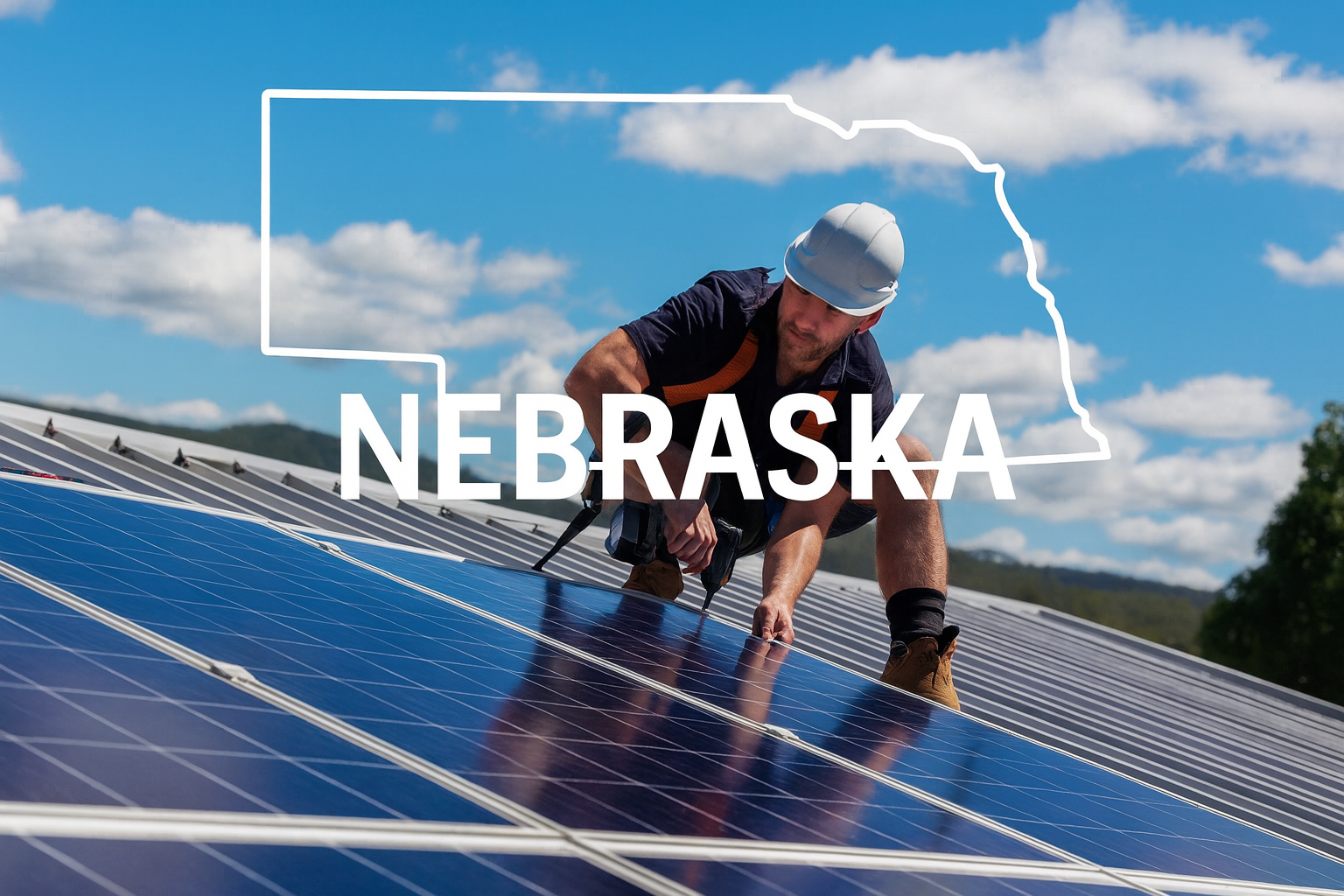
Nebraska’s Solar Development:
Nebraska ranks #45 in residential solar installations with just over 200 MW of total capacity, representing significant untapped potential. The state receives excellent solar irradiance comparable to much sunnier states, but adoption has been slower due to low electricity rates and public power structure. Nebraska employs over 1,800 solar workers, demonstrating growing industry interest. Installer networks are developing in Omaha, Lincoln, Grand Island, and across rural areas where solar can provide valuable energy independence.
Public Power and Net Metering:
Nebraska is unique in that it’s the only state where all electricity is provided by public power districts — there are no investor-owned utilities. Net metering availability varies significantly by power district, with some offering full retail credit and others providing reduced compensation. Nebraska’s electricity rates are among the lowest in the nation (often $0.10-$0.12 per kWh), which challenges solar economics. However, excellent solar production — panels here generate 15-20% more energy than in cloudier states — helps compensate. Nebraska offers property tax exemption and sales tax exemption for solar installations. Most Nebraska solar systems achieve payback within 14-18 years.
Agricultural and Rural Applications:
Nebraska has significant agricultural land and rural population, making solar particularly valuable for farms and rural homes. Solar can offset electricity costs for irrigation, livestock operations, and grain handling. Nebraska experiences extreme weather — scorching summers, frigid winters, severe thunderstorms, and occasional tornadoes. Solar panels perform well across Nebraska’s climate, and when paired with battery backup, they provide critical energy security for rural properties where grid restoration can take longer. For Nebraska farmers and rural homeowners looking to reduce operating costs and gain energy independence, solar offers practical long-term value.