The Best Solar Companies in Maryland (2026 Guide)

Maryland homeowners are increasingly turning to solar to reduce their dependence on the grid, lower electric bills, and support a cleaner energy future. With some of the strongest state incentives in the country and solid sunlight through much of the year, Maryland makes it easy to go solar. Add in net metering and SREC income, and the numbers work in your favor.

Choosing the right installer matters just as much as choosing to go solar in the first place — the difference between a company that’s licensed, experienced with Maryland’s SREC market and net metering rules, and backed by a real workmanship warranty and one that isn’t can add up to thousands of dollars over the life of your system. Below, you’ll find Maryland’s solar companies compared side by side, including which ones have completed EnergyScout’s verification process, so you can start your search with a shorter, more confident list.
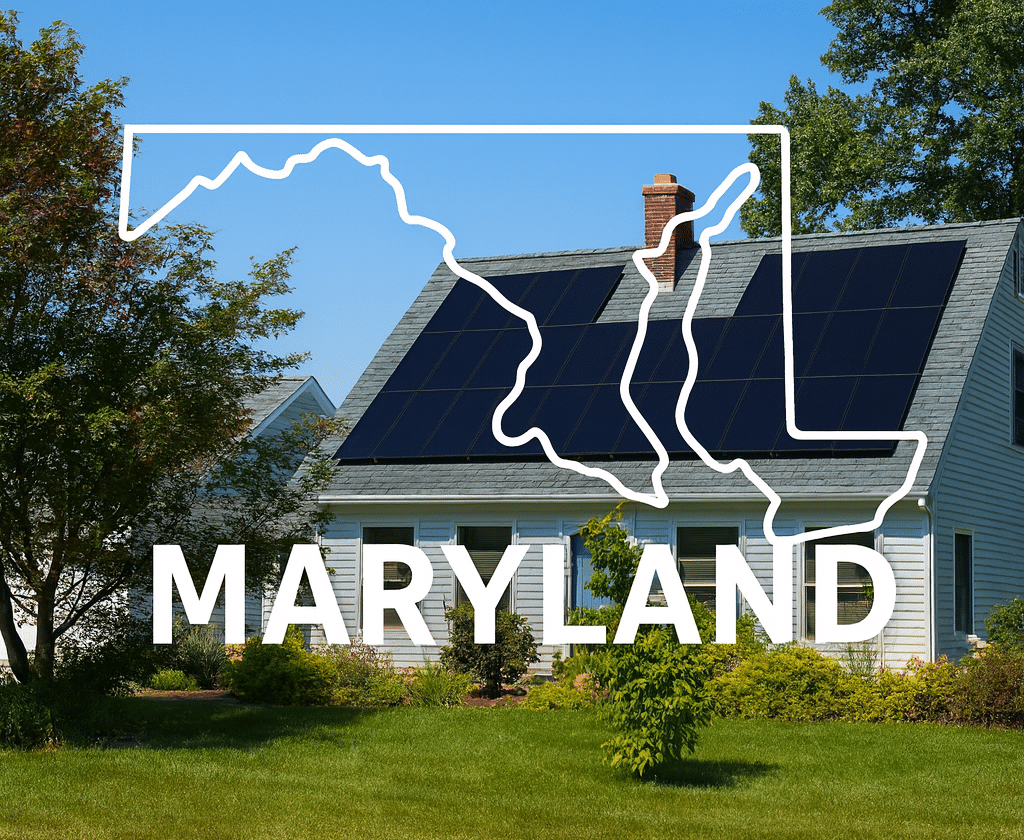
residential solar roof in Maryland
Last Reviewed: 2026-09-11

Solar Installers in Maryland

EnergyScout tracks local and national solar companies serving homeowners throughout the state. Use the directory below to compare installers based on experience, service area, products, certifications, and other company information.

Companies displaying the EnergyScout Verified badge have completed an additional review process that includes a direct interview, screening customer feedback, and providing evidence of completed installations. Verification provides another layer of information when comparing solar companies, but homeowners should still evaluate multiple installers to find the right fit for their home.

How EnergyScout Verified works →

How to choose a solar installer.

Before contacting installers, read our guide on how to evaluate proposals, warranties, and long-term support.

State Solar at a Glance

11th
Residential
10th
Commercial
28th
Utility
Jobs Capacity
4,973
Solar Jobs
16th
Ranked for Solar Jobs
State Solar Capacity
2,417
Total Solar Installed (MW)
6.98%
% of states electricity from solar.
288,918
Enough to power homes

Source: Solar Energy Industries Association (SEIA), State By State data, as of January 2026 — seia.org/solar-state-by-state

Why Solar makes sense in Maryland

Understanding Home Solar in Maryland

Maryland’s Solar Incentive Leadership:
Maryland ranks #11 in residential solar and #10 in commercial solar installations, with nearly 2,500 MW of total capacity. The state has developed one of the most sophisticated solar incentive programs in the country, combining SRECs, property tax exemptions, and sales tax exemptions to make solar financially attractive. Maryland’s solar industry employs nearly 5,000 workers, and the state has consistently been a top-10 market for solar adoption on the East Coast. From Baltimore and the DC suburbs to the Eastern Shore and Western Maryland, solar infrastructure is well-developed and accessible.

SREC Market and Financial Returns:
Maryland’s SREC program is one of the most valuable in the nation. For every megawatt-hour of solar energy your system produces, you earn one SREC, which you can sell on Maryland’s SREC marketplace for ongoing income. SREC prices in Maryland have historically been strong, providing hundreds to thousands of dollars in additional annual income beyond your electricity savings. Maryland also offers property tax exemption for solar installations (your home’s value increases without higher property taxes) and sales tax exemption on solar equipment. Combined with net metering — which gives you bill credits for excess solar production — Maryland delivers some of the fastest solar payback periods on the East Coast, typically 7-11 years.

Energy Costs and Bay-Area Weather Resilience:
Maryland’s electricity rates vary by utility but are generally higher than the national average, particularly in the Baltimore-DC corridor where demand is high. Summer cooling costs and winter heating expenses drive up annual electricity usage, making solar particularly valuable for offsetting seasonal peaks. Maryland experiences diverse weather challenges — from coastal storms and flooding on the Eastern Shore to winter storms and ice events in Western Maryland. Power outages during severe weather can last days, and solar + battery backup provides critical energy security. For Maryland homeowners in hurricane-prone coastal areas or regions with aging grid infrastructure, solar paired with storage offers both financial savings and storm-season peace of mind.

Frequently Asked Questions

A typical home solar system in Maryland costs around $34,839 before incentives — about $2.60 per watt for a 13.4 kW system, per EnergySage’s September 2026 marketplace data. With financing, many homeowners see a monthly loan payment that’s a bit less than what they were already paying their utility — and once the loan’s paid off, that payment drops to zero while utility bills keep climbing. Comparing quotes from a couple of verified installers is still the best way to see exact numbers for your home.
Maryland combines net metering, an active solar renewable energy credit market and targeted state incentives. The FY27 Maryland Solar Access Program opened in July 2026 with up to $10 million anticipated for qualifying income-eligible homeowners using participating contractors. The important distinction is between a program that exists in law and one that is funded, open and available to a homeowner at your address today. Incentives may take the form of a rebate, production payment, renewable-energy credit, tax treatment, battery payment or utility-specific tariff. Some require a reservation before construction, a participating contractor, income qualification or enrollment in a utility program. Ask the installer to identify every incentive by its official program name, show the current value and eligibility requirements, and state who receives the payment or credit. If funding is limited, request confirmation that capacity or funds are actually available. A proposal should never subtract an incentive from the net price simply because it existed in a prior program year.
Because Maryland projects can stack utility bill credits, SREC value and—when eligible—upfront state support, every proposal should itemize each value stream and clearly state who owns the SRECs. That issue should be built into the proposal rather than treated as an afterthought. Ask the installer to show how it affects system size, annual production, bill savings, equipment choice and long-term service. For weather or roof concerns, review roof age, structural requirements and the exact product certifications rather than accepting a blanket claim about durability. For rate-related concerns, ask for tariff-aware modeling instead of a simple annual-kWh calculation. If battery storage is part of the solution, compare solar-only and solar-plus-storage economics side by side and ask exactly which loads the battery will support during an outage.
Get at least three proposals and require each company to quote the project on the same basis: cash price, cost per watt, expected first-year production, degradation assumptions, equipment, workmanship coverage and the current Maryland utility tariff. Ask who performs the installation, who handles interconnection and incentive paperwork, and who will service the system if an inverter, optimizer or battery fails years later. Separate financing from system price so interest and dealer fees do not hide the underlying cost. Ask for recent projects in your utility territory, because local tariff, permitting and interconnection experience can be more valuable than a large national footprint. EnergyScout Verified status adds another diligence signal, but it should complement—not replace—competitive quotes and contract review.
As of September 2026, homeowners in Maryland pay an average of 21.84 cents per kWh, above the 18.34-cent national average, with a typical monthly bill around $168. Rates have jumped 13.2% over the past year, one of the steepest increases in the country. That’s on top of a net metering program scheduled to close to new systems by mid-2027, so the incentive to lock in current terms is real on both fronts.

Exploring Solar?

What Is a Virtual Power Plant?

Already have solar?

Solar Monitoring Not Working?

Calculate your savings.

Get clear answers on costs, savings, incentives, and what to expect – before you talk to a local installer.