
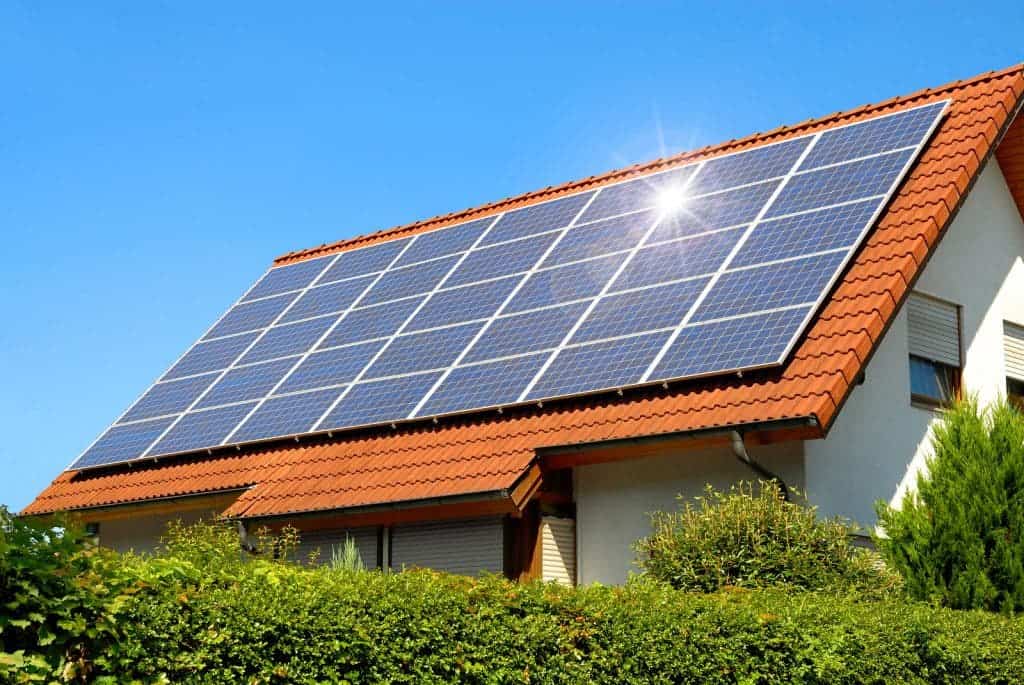
If you’re exploring solar for the first time, one of the first questions you’ll have is a simple one: how many solar panels will I actually need? The answer depends on a few key variables — how much electricity your home uses, how much sunlight your area receives, and which panels your installer recommends.
For most U.S. homes, the answer lands somewhere between 18 and 30 panels on a system sized between 7 and 10 kilowatts (kW). But those are ranges, not answers. The most accurate estimate starts with your own electricity usage — and this guide walks you through exactly how to calculate it.
The Quick Answer
Here’s what the typical U.S. residential solar system looks like:
| Variable | Typical Range |
| System size | 7–10 kW |
| Number of panels | 18–30 panels |
| Panel wattage | 400–450 watts each |
| Average annual usage offset | 90–100% |
Your actual system will depend on how much electricity you use, your roof’s size and orientation, local sun hours, and which panel technology your installer recommends.
Step 1: Find Your Annual Electricity Usage
Solar installers size systems in kilowatt-hours (kWh) — the same unit your utility uses to measure consumption. To estimate the right system size, you need your total annual kWh usage, not just a monthly average.
How to find your annual kWh usage:
- Log into your utility account or pull out 12 months of paper bills
- Find the kWh used each month
- Add all 12 months together
Here’s what a full year of usage might look like for a home in a mixed climate:
| Month | Usage (kWh) |
| January | 380 |
| February | 340 |
| March | 310 |
| April | 290 |
| May | 420 |
| June | 710 |
| July | 880 |
| August | 860 |
| September | 590 |
| October | 350 |
| November | 340 |
| December | 380 |
| Annual Total | 5,850 kWh |
In this example, the home uses roughly 5,850 kWh per year — or about 490 kWh per month on average. Note the summer spike from air conditioning: this is common across much of the U.S. and is exactly why annual usage is a more reliable baseline than any single month.
Step 2: Estimate the Solar System Size You Need
Once you have your annual kWh usage, you can estimate the solar system size needed to offset it. System size is measured in kilowatts (kW) — a unit of power output under ideal conditions.
On average across the U.S., 1 kW of solar capacity produces roughly 850 kWh of electricity per year. This figure is called the system’s production ratio, and it varies significantly by location.
| Region | Avg. kWh per kW of Solar (Annual) |
| Southwest (AZ, NM, NV) | 1,400–1,600 kWh |
| Southeast (TX, FL, GA) | 1,200–1,350 kWh |
| Midwest/Mountain (CO, UT, KS) | 1,200–1,400 kWh |
| Northeast (NY, MA, PA) | 1,000–1,200 kWh |
| Pacific Northwest (WA, OR) | 900–1,100 kWh |
| National Average | ~1,200–1,300 kWh |
Note: The “850 kWh per kW” figure often cited in national averages is on the conservative side. Most modern systems outperform this, especially in sunnier regions. Your installer will use your specific location’s sun-hour data (called peak sun hours) for a more precise estimate.
The basic formula:
Annual kWh usage ÷ estimated annual production per kW = system size needed (kW)
Using our example of 5,850 kWh annually and a production ratio of 1,250 kWh/kW (a reasonable estimate for much of the country):
5,850 ÷ 1,250 ≈ 4.7 kW
That’s a relatively modest system — which makes sense for a home using less than 6,000 kWh per year. A home using 10,000–12,000 kWh annually (common in larger homes or those with EVs and heat pumps) would need something closer to 8–10 kW.
Step 3: Convert System Size to Panel Count
Once you know the system size you need in kW, converting to a panel count is straightforward. Modern residential solar panels are typically rated between 400 and 450 watts (0.4–0.45 kW) each.
| System Size | Est. Panel Count (400W panels) | Est. Panel Count (450W panels) |
| 5 kW | 13 panels | 12 panels |
| 6 kW | 15 panels | 14 panels |
| 7 kW | 18 panels | 16 panels |
| 8 kW | 20 panels | 18 panels |
| 10 kW | 25 panels | 23 panels |
| 12 kW | 30 panels | 27 panels |
Higher-efficiency panels produce more power per panel, so you can achieve the same system output with fewer of them. This matters most when roof space is limited.
Step 4: Make Sure Your Roof Can Fit the System
Panel count only matters if your roof can physically accommodate the array. As a general rule, plan for approximately 90–100 square feet of usable roof space per kilowatt of solar capacity.
| System Size | Roof Space Required |
| 5 kW | ~450–500 sq ft |
| 7 kW | ~630–700 sq ft |
| 8 kW | ~720–800 sq ft |
| 10 kW | ~900–1,000 sq ft |
The most productive roof areas are south-facing (in the Northern Hemisphere), pitched at 15–40 degrees, and free from shade during peak sun hours (roughly 9 a.m. to 3 p.m.). East- and west-facing arrays still work — they just produce somewhat less than south-facing panels.
If your usable roof space is limited, your installer may recommend higher-efficiency panels to maximize output within the available footprint. Ground-mounted systems are another option for homes with shaded or inadequate roofs.
Step 5: Account for Future Energy Needs
One of the most common solar sizing mistakes is designing a system only for current usage. Solar panels have a 25–30 year useful life, and your electricity needs are likely to grow over that period.
Common reasons home electricity usage increases over time:
- Adding an electric vehicle (EVs typically require 3–4 kW of additional solar capacity to cover charging needs)
- Installing a heat pump for heating and cooling
- Upgrading to an induction stove or electric appliances
- Adding home battery backup (which is charged from the solar array)
- Home additions or new family members
If your current usage calls for a 6 kW system but you plan to add an EV in the next two years, sizing up to 9–10 kW now is almost always cheaper than expanding later. A good installer will walk through your electrification plans before finalizing the design.
Why Two Installer Proposals May Look Different
If you get quotes from multiple installers, don’t be surprised if the proposed panel counts differ — sometimes significantly. This doesn’t mean one installer is wrong.
Two systems can produce the same annual output while looking completely different on paper:
| Installer | Panel Wattage | Panel Count | System Size | Est. Annual Output |
| Installer A | 450W | 18 panels | 8.1 kW | ~9,720 kWh |
| Installer B | 400W | 20 panels | 8.0 kW | ~9,600 kWh |
Both proposals are essentially equivalent. When comparing quotes, focus on total system size (kW) and estimated annual production (kWh) — not the panel count alone.
Also pay attention to the panel brand and warranty terms. A 25-year production warranty from an established manufacturer carries more weight than a slightly lower price from a lesser-known brand.
What About Battery Backup?
If you’re considering pairing your solar system with a home battery (like a Tesla Powerwall or Enphase IQ Battery), this affects sizing in two ways:
- Your solar array needs to be large enough to both power your home and charge the battery during daylight hours
- Battery storage is typically sized to cover 1–2 days of essential loads during an outage, not your full home consumption
For most homeowners adding battery backup, this means sizing the solar array 10–20% larger than usage alone would suggest. Your installer will model this based on which loads you want backed up and how many days of autonomy you need.
Frequently Asked Questions
Frequently Asked Questions
Most solar professionals recommend sizing for anticipated future usage rather than just your current consumption. Solar arrays last 25–30 years, and adding panels later is significantly more expensive than right-sizing the system at installation. If you plan to add an EV, switch to a heat pump, or electrify your appliances in the next few years, factor that into your sizing conversation with installers. A modestly larger system now is almost always the more cost-effective choice long-term.
Most U.S. homes need between 18 and 30 solar panels, on a system sized between 7 and 10 kW. However, the exact number depends on your annual electricity usage, the wattage of the panels your installer uses, and how much sunlight your location receives. Homes with higher electricity usage — or those planning to add electric vehicles or heat pumps — may need larger systems.
Yes. Most residential solar systems are designed to offset 90–100% of your annual electricity usage. That said, “running on solar” doesn’t mean you’re disconnected from the grid — it means your solar production covers your usage over the course of a year. At night or during cloudy stretches, grid power fills the gap. Adding battery storage reduces grid reliance further, but most grid-tied systems don’t eliminate it entirely.
Start with your annual electricity usage in kWh (found on 12 months of utility bills). Divide that by your location’s estimated annual solar production per kW (roughly 1,000–1,600 kWh depending on where you live). That gives you your system size in kW. Then divide system size by the wattage of each panel (usually 0.4–0.45 kW) to get panel count. A local installer can run this calculation precisely using your actual utility data and your home’s roof specifications.
Yes. A south-facing roof in the U.S. produces the most solar energy per panel, which means you need fewer panels to hit a given system size. East- or west-facing roofs produce roughly 15–20% less per panel, so you’d need more panels to generate the same annual output. North-facing roofs are generally not viable for solar in the Northern Hemisphere. If your best roof faces east or west, an experienced installer will account for this in the system design.
If roof space is the limiting factor, you have a few options. The most common solution is using higher-efficiency panels, which generate more power per square foot. You can also install a ground-mounted system if you have available yard space. In some cases, homeowners with small roofs will design a partial-offset system — one that covers 60–70% of their usage rather than 100% — and rely on the grid for the remainder.
Location affects how much energy your panels produce per year, which directly impacts how many you need. A 7 kW system in Phoenix might produce 10,000+ kWh annually, while the same system in Seattle might produce only 7,000 kWh. If you live in a cloudier region, you’ll need a larger system (or more panels) to offset the same electricity usage compared to someone in a sunnier climate. Your installer will use data on your local peak sun hours to size the system appropriately.
Final Thoughts
The number of solar panels your home needs comes down to one foundational number: how much electricity you actually use each year. From there, system size follows naturally, and panel count is just a function of which panels your installer specifies.
What the math can’t fully capture is the value of working with an installer who understands your local grid, utility rate structure, and long-term energy goals. A well-designed system isn’t just sized correctly for today — it’s built to serve your home for the next 25 years.
Use the estimates in this guide to set realistic expectations before you start getting quotes. Then compare proposals based on total system size (kW) and estimated annual production (kWh) — those two numbers will tell you far more than panel count alone.